
Never the Same River
On changing our minds, moving on, and why the chicken ban might deserve a rethink


TLDR: We label our dogs’ food reactions as if they’re written in stone. But the gut is a living, shifting ecosystem -- and what caused trouble six months ago may not cause trouble now. Sometimes the wisest thing is to try again.
There’s a line attributed to Heraclitus -- the ancient Greek philosopher who clearly had too much time on his hands -- that you can’t step into the same river twice.
The water’s moved. The riverbed’s different. You’re different, too.
I keep coming back to this when owners tell me their dog “can’t do chicken.”
I understand why we think in permanent verdicts. Something went wrong, we found a suspect, and we removed it. Problem solved. It’s a very human way of managing uncertainty -- tidy it up and move on.
But the gut doesn’t file things away like that.
The canine microbiome is a living community of trillions of organisms, constantly in flux. Early microbiome research confirmed what many suspected: the canine gut microbiota is dynamic, with bacterial populations shifting in response to diet, environment, and time.
What this means, practically, is that the gut your dog had during that difficult patch six months ago -- inflamed, perhaps, from illness or antibiotics or a long stretch on poor food -- is not necessarily the gut they have now.
Starting conditions matter
Think about it this way. Diet, age, host factors, and environment all strongly influence gut microbiome composition -- which is why the same dietary input can produce markedly different responses at different points in time.
A food that arrives in an inflamed, depleted gut meets a very different reception than the same food arriving in a calm, well-supported one.
That’s not a reason to throw caution to the wind. It’s a reason to hold our conclusions a little more lightly.
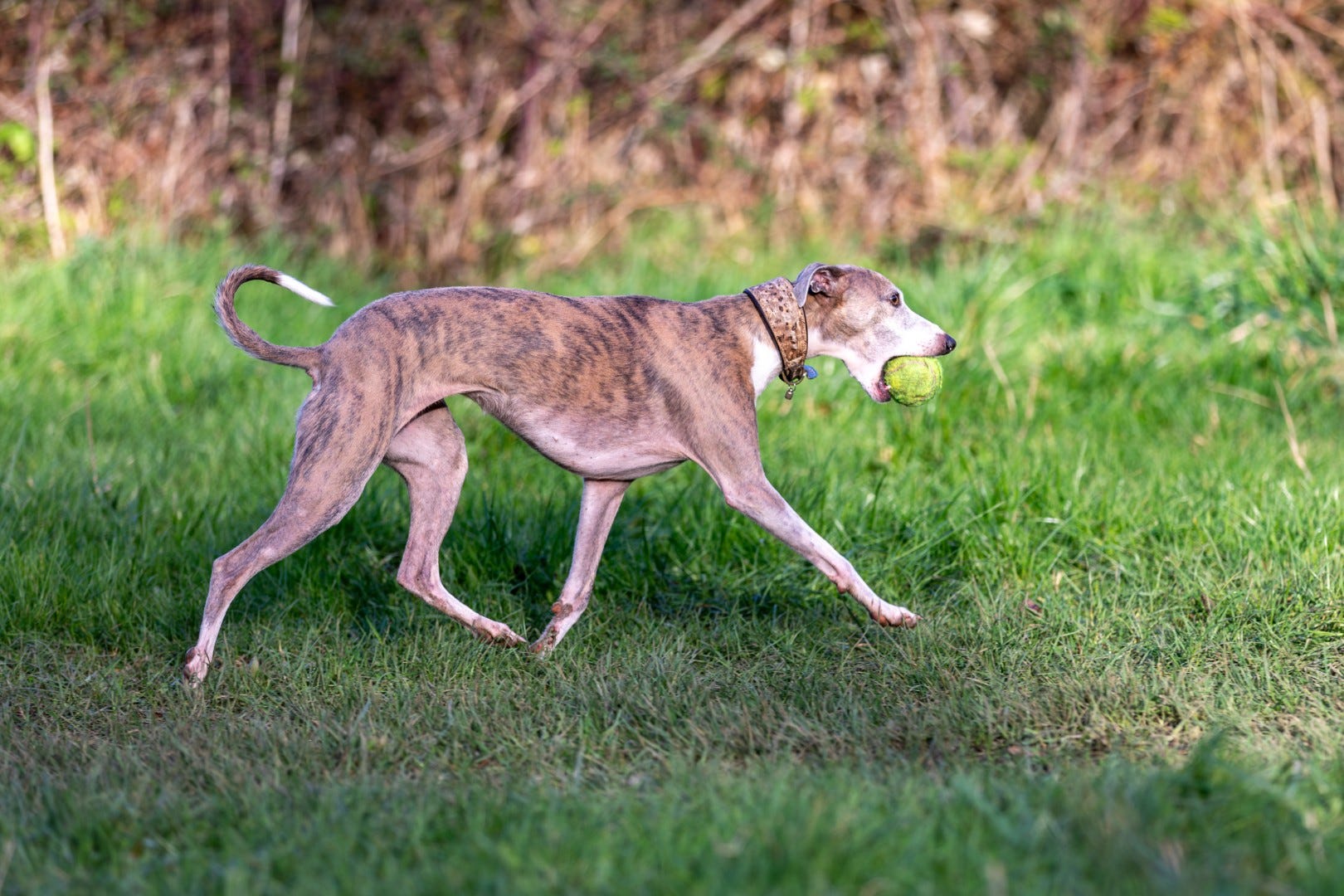
I think about this with Bluebell, Mouse, and Jet. Three dogs, same household, broadly similar lives -- and yet their guts respond differently to the same things, and differently again depending on what’s been going on for them lately. A walk through a new bit of woodland. A mild upset after Jet’s latest hedgerow adventure. A warm spell that changes what they’re finding to eat on their wanderings.
Dogs acquire new microbial strains through exposure to varied environments -- and those strains contribute to the diversity and stability of the gut over time.
The gut is always receiving new information. It’s always adjusting; shifting sands.
Verdicts versus working hypotheses
This is really a piece about how we think, not just about what we feed.
In complex biological systems -- and the gut is about as complex as it gets -- linear thinking tends to mislead us. This caused that. Therefore, always avoid this. It feels rigorous. Often it isn’t.
A more useful frame is to treat past reactions as working hypotheses rather than settled facts. A signal worth noting, not a sentence worth serving indefinitely.
If your dog’s gut has had time to settle -- if they’ve been well, eating simply, living calmly -- it’s worth asking whether the banned food deserves another look. Slowly. Carefully. With your eyes open.
Sometimes the answer’s still no. And that’s fine.
But sometimes you get a pleasant surprise.
The river’s moved on.
References
Bhosle A et al. (2025). Response of the gut microbiome and metabolome to dietary fiber in healthy dogs. mSystems 10(1):e00452-24.
Frontiers in Microbiology (2025). Dynamics of the canine gut microbiota of a military dog birth cohort. Front Microbiol. doi:10.3389/fmicb.2025.1481567.
J Anim Sci Biotechnol (2025). Understanding the diversity and roles of the canine gut microbiome. 16:95.
Nick Thompson BSc (Hons) Path Sci., BVM&S, VetMFHom, MRCVS is a holistic veterinary consultant based near Bath and Founding President of the Raw Feeding Veterinary Society (rfvs.info). Clinical consultations: holisticvetconsultant.com.
Actually, I found that true of my old cat. She would get colitis after eating chicken, so we went to fish. I found, after a time, that she could eat baked chicken. Now, I can rotate in some canned chicken.
Please mention the benefits of green ( unprocessed ) tripe for dogs . My puppy gets 25% of her daily chow from lamb tripe . She loves it and her coat looks great . European Irish wolfhound breeders noted that their dogs lived longer when unprocessed tripe was added to the diet .